
Next Generation Modern Payroll Processing: Intelligent, Compliant, and Employee-Centric
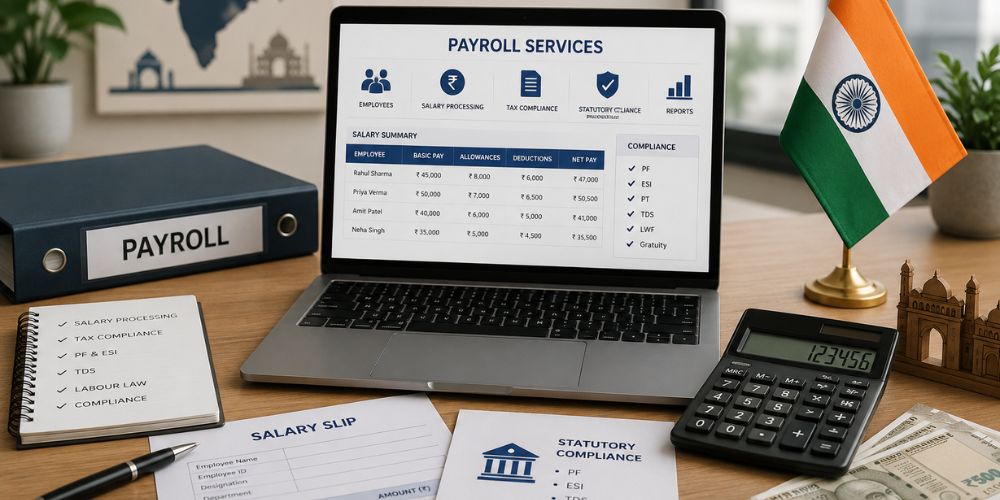

Payroll is one of the few business functions that employees notice only when something goes wrong. A delayed salary, an incorrect tax deduction, or a compliance lapse can erode employee trust and create significant business risk. Behind every payslip lies a complex process that demands precision, regulatory compliance, data security, and seamless coordination.
That complexity is only increasing. Hybrid workforces, evolving labour laws, flexible compensation structures, and rising employee expectations have transformed payroll from a routine back-office activity into a business-critical function. Organizations can no longer rely on manual processes and disconnected systems to keep pace.
The next generation of payroll processing is built for this new reality. Powered by intelligent payroll automation, real-time compliance, and employee-centric digital experiences, modern payroll solutions help organizations improve accuracy, reduce risk, streamline operations, and deliver a better experience for every employee. Payroll is no longer just about paying people on time—it’s about enabling a smarter, more resilient workplace.
Why Traditional Payroll Processing Is No Longer Enough?
Payroll today extends far beyond simple salary calculations. Organizations now manage a diverse workforce comprising permanent employees, contractual staff, consultants, gig professionals, and remote teams—often spread across multiple geographies and regulatory jurisdictions. At the same time, compensation structures are becoming more dynamic, tax frameworks continue to evolve, and compliance requirements are growing more intricate.
Against this backdrop, traditional payroll processing methods built on spreadsheets, disconnected systems, and manual interventions are becoming increasingly difficult to sustain. Every payroll cycle now requires reconciling data across multiple platforms, accommodating frequent changes in salary structures, applying evolving tax and statutory rules, processing reimbursements in real time, and ensuring compliance across both central and state regulations.
This rising complexity is accelerating the shift toward payroll automation, enabling organizations to streamline payroll operations while improving speed, accuracy, and compliance.
What Powers Modern Payroll Processing?
Many organizations understand the value of automation but still wonder how an automated payroll system works in practice.
Modern payroll platforms bring together data from HRMS, attendance, leave management, finance, and employee records into a single workflow. Once payroll inputs are finalized, the system automatically applies salary structures, calculates earnings and deductions, validates statutory requirements, computes taxes, generates bank transfer files, creates payslips, and prepares statutory reports.
Instead of relying on multiple manual checks, intelligent payroll automation uses configurable business rules to ensure consistency across every payroll cycle. Built-in workflows, automated approvals, audit trails, and real-time dashboards provide complete visibility into payroll operations while significantly reducing processing time.
As organizations scale, automation transforms payroll from a repetitive administrative task into a dependable, technology-enabled business function.
Intelligent Compliance in an Evolving Regulatory Environment
Compliance is one of the most challenging aspects of payroll processing. Labour regulations evolve, tax rules change, and statutory requirements often differ across states. Keeping pace manually is both time-consuming and prone to errors.
Next-generation payroll platforms are designed with configurable compliance engines that automatically apply the latest organizational policies and statutory rules, helping businesses reduce compliance risks while maintaining operational efficiency. Some of the most common compliance-related questions organizations ask include:
1. Does the system automatically enforce the 50% Basic Salary rule?
Modern payroll solutions allow organizations to configure salary structures in line with applicable statutory requirements, including the proposed “50% Basic Salary” framework under the Code on Wages. As regulatory provisions are notified and implemented, payroll rules can be updated centrally, enabling the system to validate salary structures automatically and reduce manual intervention.
2. How does the software dynamically recalculate gratuity and provident fund (PF) liabilities?
Changes in the statutory definition of wages directly impact employer liabilities such as gratuity and provident fund contributions. Intelligent payroll systems automatically recalculate these liabilities whenever salary structures, wage definitions, or employee compensation components change. This helps organizations maintain compliance while avoiding calculation errors or underpayments.
3. How does the system handle state-wise professional tax (PT) and labor welfare fund (LWF) variations?
Professional Tax and Labour Welfare Fund regulations differ significantly across states, with varying slabs, contribution frequencies, exemptions, and filing timelines. Advanced payroll processing platforms maintain configurable state-wise compliance rules that automatically calculate the correct deductions based on employee location, minimizing manual tracking and improving statutory accuracy.
Key Capabilities of Next-Generation Payroll Processing
While automation is at the core of modern payroll, next-generation platforms combine several intelligent capabilities that make payroll more accurate, scalable, and employee-friendly.
- End-to-end payroll automation: From attendance capture to salary disbursement and statutory reporting, every stage of payroll processing is automated through standardized workflows.
- AI-assisted payroll validation: Intelligent checks identify anomalies such as unusual salary variations, duplicate payments, missing inputs, or compliance exceptions before payroll is finalized.
- Automated statutory compliance: Configurable rule engines ensure payroll remains aligned with changing tax regulations, labour laws, and statutory contribution requirements.
- Multi-state payroll support: State-specific Professional Tax, Labour Welfare Fund, minimum wages, and other statutory variations are managed automatically.
- Seamless integrations: Modern payroll systems integrate with HRMS, attendance, leave management, ERP, accounting, and banking platforms to eliminate duplicate data entry.
- Employee self-service: Employees can securely access payslips, tax declarations, Form 16, reimbursement status, leave balances, and payroll history through web and mobile portals.
- Analytics and reporting: Real-time dashboards provide insights into payroll costs, statutory liabilities, overtime expenses, and workforce trends, enabling better financial planning.
- Enterprise-grade security: Role-based access, encrypted data storage, audit logs, and secure workflows protect sensitive employee information throughout the payroll lifecycle.
Benefits of an Automated Payroll System
The benefits of an automated payroll system extend far beyond reducing paperwork or processing salaries faster. Modern payroll solutions deliver measurable value across finance, HR, compliance, and employee experience.
Key benefits include the following:
- Faster payroll cycles with minimal manual intervention.
- Greater accuracy in salary calculations, tax deductions, reimbursements, and statutory contributions.
- Improved compliance with central and state regulations through automated rule-based processing.
- Reduced risk of payroll errors, penalties, and delayed salary payments.
- Lower administrative workload, allowing HR and finance teams to focus on strategic initiatives.
- Better visibility through real-time dashboards, audit trails, and comprehensive reports.
- Secure management of confidential payroll data.
- Enhanced employee satisfaction through timely payments, transparent payroll information, and self-service capabilities.
Collectively, these advantages make payroll automation an essential component of modern workforce management.
Payroll Processing as an Employee Experience Function
Employees increasingly expect workplace systems to be as intuitive and responsive as the digital services they use every day. Payroll is no exception.
Modern payroll processing places employee experience at the center by providing instant access to payslips, tax documents, reimbursement status, investment declarations, and payroll history through self-service portals. Transparent salary calculations and faster query resolution help build employee confidence while reducing routine HR support requests.
When payroll is accurate, timely, and transparent, it strengthens trust between employees and the organization. In today’s competitive talent market, that trust contributes meaningfully to employee engagement and retention.
Why Businesses Are Moving to Managed Payroll Processing?
While intelligent technology has transformed payroll, software alone does not eliminate payroll complexity. Organizations must still manage statutory filings, tax updates, labour law changes, audits, employee queries, and data security while ensuring payroll is processed accurately every month.
This is why many businesses are moving beyond software to managed payroll processing solutions that combine advanced technology with payroll expertise. A managed payroll partner enables organizations to:
- Automate end-to-end payroll operations across diverse workforce categories.
- Stay current with evolving central and state labour regulations.
- Improve statutory compliance and reporting accuracy.
- Integrate payroll seamlessly with HR, finance, attendance, and leave systems.
- Strengthen payroll governance and data security.
- Deliver a consistent, employee-centric payroll experience while reducing administrative effort.
For growing organizations, managed payroll offers both the scalability of technology and the assurance of dedicated payroll specialists.
Conclusion
Payroll has evolved into one of the most strategic business functions within an organization. It influences compliance, financial accuracy, operational efficiency, and employee trust—all while supporting increasingly complex workforce models.
The next generation of payroll processing combines intelligent payroll automation, built-in compliance, seamless integrations, and employee-centric digital experiences to simplify one of the most critical business processes. Rather than reacting to payroll challenges each month, organizations can build a resilient payroll ecosystem that adapts to regulatory changes, scales with business growth, and delivers a superior employee experience.
As businesses continue their digital transformation journey, investing in intelligent payroll processing is no longer simply an operational improvement—it is a strategic decision that strengthens compliance, enhances workforce confidence, and prepares organizations for the future of work.
Author

Latest Blogs
Next Generation Modern Payroll Processing: Intelligent, Compliant, and Employee-Centric
Payroll is one of the few business functions that employees notice only when something goes wrong. A delayed salary, an incorrect tax deduction, or a...
Read MoreBuilding Business Resilience Through Strategic Workforce Transitions
The rapid advancement of artificial intelligence (AI), automation, and digital technologies is fundamentally reshaping the world of work. As organizations accelerate digital transformation and adopt...
Read MoreThe A to Z of Payroll Management for Businesses
As businesses grow, payroll management becomes increasingly complex. What starts as a simple salary-processing function soon expands to include tax compliance, statutory deductions, employee benefits,...
Read MoreWorkforce Redeployment is Top Priority in the AI Era
"We are being afflicted with a new disease ... technological unemployment." — John Maynard Keynes, 1930 Nearly a century after economist John Maynard Keynes warned...
Read MoreWhy Outsourcing Payroll Makes Business Sense in 2026
Managing payroll has always been one of the most critical responsibilities for any organization. Employees expect accurate and timely salaries, while businesses must navigate a...
Read More