
Automation is the key to the Future of People Management

Are you looking out for technological solutions that can bring in quarter on quarter growth?
Are you running businesses that are digital friendly? Are you looking out for tips on how to ensure that the future of people management is safe and effective?
Automation is the key to the future of people management. With the economy stabilising now than before, it is critical for business decision makers to invest in options and opportunities that give long term success. Staffing solutions, hiring processes, and recruitment mechanisms should be automated.
Technology is playing a crucial part in the ongoing pandemic, it makes it easier for HR leaders to share the information with remote working employees with digital solutions and automation tools and software. Automation has been an important part of this digitised evolution and has been critical in moving from manual distributed tasks to streamlined processes across the people supply chain. It has proved to be a game-changer as it has been helpful in keeping up with the hiring trends and ensuring the improvement of employee productivity resulting in better engagement, retention, and smoothness of HR processes.
According to the Global Future of Work Survey, 57% of employers say that the main goal of automation is the augmentation of employee performance and productivity. Organisations that have already started investing in tools and platforms to make the critical processes of hiring easy and error-free, thereby reducing the risks that may come, will have a strong edge over their competitors.
Benefits of automation on HR process
Automation is an efficient solution for organisations to streamline the process and focus on the core work. According to a study, HR managers who do not automate the process have faced Lower employee productivity by 41%.
Through automation, companies are developing products to ensure employee performance by automating routine tasks, aligning employee engagement with organisation goals, and reducing human errors caused by manual tasks. Benefits of automation are being seen across businesses, like:
1- Safeguarding crucial data and making it easy to process it
2- Streamline communications within teams and create an organised work environment
3- The recruitment process is better streamlined and simplified
4- Developing processes to ensure employee productivity as a way of life
5- Building a new culture around HR policies that ensures a faster way to acquire & retain employees with real-time insight
Automation Tools to Improve HR:
Application Tracking System (ATS): A Software that streamlines the entire recruiting process with the help of technology and automation to meet the end-to-end hiring requirements. It enhances the major metrics—cost, time, and quality—of hiring a workforce. It is the best way to automate the staffing process and recruit better candidates.
E-onboarding: On average a new hire has 54 activities to complete during their onboarding experience. The manual collection of data and verification is time-consuming, and the chances of errors are high. With the E-onboarding platform, the deployment of the workforce is efficient, and data is captured securely and smoothly. With a single click, the scanning and uploading of data on the cloud are just a few second tasks.
Attendance and leave: The attendance and leave management system helps companies in managing the workforce smoothly. It allows companies to capture and keep records of employee check-in and check-out with their location-wise data using devices and reduces the chances of ghosting employees. It works as the centralised data hub for the companies, which gives better visibility and builds trust.
Performance management: It gives a view into the future by frequently monitoring and managing workplace performance. These solutions have various features Like boosting employee engagement and satisfaction with a continuous feedback approach. It allows managers to set the KRAs for the employees on the basis of their function and designation. A Study from Socialcast shows that 69% of workers will work harder if they know their work is valued and appreciated.
Expense management: Expense management software helps in streamlining the expense or reimbursement process to ensure payment of the right amount is done and tracks the status of all the processes of submissions till reimbursement. It eliminates the workload of managing it on paper by just simply uploading all the documents in the system and getting them approved with the automation in place.
Conclusion
Future of people management can be better if Automation is understood as the key. The optimization of the performance of the talent lies in workforce management, which is better ensured with automation. The Great resignation and the great depression have jolted the HR processes; now the automation process would help in the betterment of the quintessential.
With automation, the people management structures will have a dynamic shift and would see the human capital needs being met up by the industries.
A revisit of the talent strategy due to people management will ensure a formal audit of the existing process of the People, process, and technology framework. Data-driven improvements can take place, bringing efficiency and effectiveness.
Not just the employees who need the job, but employees who are skilled, talented, and employable would take the spotlight, which brings long-term rewards to the employers and businesses.
With the digital upgrade, electronic recruitment, virtual workforce payroll, real-time attendance, software solutions support, automated integration, and digital tools and apps, a lot can update and smoothen the way the people management can be upgraded with automation as the key.
Author
Latest Blogs
Retail Staffing and Recruitment Challenges in India
India's retail sector is undergoing a period of rapid transformation. Driven by rising consumer spending, the expansion of organized retail, omnichannel business models, and growing...
Read MoreCombat Employee Turnover with Predictive AI
Employee attrition has become one of the biggest workforce challenges for modern businesses. It impacts productivity, hiring costs, and long-term growth. Traditional retention strategies often...
Read MoreFuture of Work: Upskilling and Reskilling in the AI Era
The acceleration of artificial intelligence is reshaping labor markets at a pace that conventional education and workforce systems struggle to match. This is not merely...
Read MoreHiring Trends 2026: Workforce Solutions for Recruitment Challenges
India’s labour market in 2026 is undergoing a structural shift. While economic expansion, digital transformation, and AI adoption are accelerating hiring demand, employers continue to...
Read MoreTalent Management Strategy 2026: Skills-First Future-Ready Workforces
Talent management strategy is undergoing a fundamental shift as organizations move beyond traditional hiring models toward building agile, skills-driven workforces. Rapid technological change, AI-led disruption,...
Read MoreThe Bright Side of Dark Stores

The COVID-19 pandemic has shaken economies and people all around the world, including India. It did, however, benefit e-grocery by allowing essential-focused e-commerce platforms to safely supply services and products at home. There has been a transition in the expectations of customers from service providers to be responsive and omnipresent across all business channels.
What is a “dark store”?
The year was 2009 when the UK based retailer Tesco opened its first ‘dark store’ as part of the company’s response to rising demand on the internet. It seemed like something out of a sci-fi film when it was initially introduced. 13 years later, the concept of “Dark Stores” is on its road to becoming a widespread phenomenon and is becoming ubiquitous in the retail and e-commerce industry.
The term “dark store,” in a nutshell, refers to a retail distribution facility or an order fulfilment platform for online sales. The increase in the number of hyper-local dark stores has given rise to a new type of retail e-commerce called “quick-commerce” or “Q-commerce.”
The ‘Q-commerce’ industry growth story and what the future holds
After the pandemic had struck, there seemed to be a shift in the mindset of the Indian consumers which significantly contributed to the growth in the number of hyperlocal online stores. When online hyperlocal retailers weren’t a reality, there were three distinct observable patterns in consumer purchasing behaviour: stock-up, top-up, and unplanned purchases.
In contrast to traditional e-commerce and offline brick and mortar stores, hyperlocal delivery/logistics is especially sought to meet unplanned purchase behaviours.
Due to consumer dissatisfaction with the two-hour wait in receiving their groceries during the lockdown, a new era of lightning-fast deliveries began, which we now call ‘Quick-commerce’.
Demand for faster and more efficient delivery has led to a hiring frenzy in the Q-commerce industry.
Due to the short turnaround times for online grocery orders, having a sufficient number of employees on hand to fulfil them is critical. This is due to the difficulty of predicting customer demand, especially for new operations.
To reduce this limitation, we provide dark-store businesses with the necessary staffing solutions to let them grow their operations as needed.
In 2021, delivery service employment increased by 28%, and that increase is expected to reach 32% in 2022. Due to aggressive vaccination campaigns and solid economic recovery, job growth momentum is expected to continue. The intent to hire in the E-commerce tech start-up space is estimated to reach 69%, which represents staggering growth of approximately 20% from the third quarter.
As per a study by Redseer, the total addressable market (TAM) for quick-commerce in India is around $45 billion, driven by middle and upper-income families in Metro and Tier-1 cities.
In FY22, the Q-commerce sector hired between 70,000 and 80,000 gig workers, with a significant increase in Q3. According to our estimates, the quick-commerce industry already employs around 100,000 individuals and may employ twice as many in FY23 as in FY22(140,000 to 160,000).
We believe that the quick-commerce sector is exciting, which is why major e-commerce businesses want to join the bandwagon, despite the fact that the market is competitive. The more saturated the market becomes, the greater the chance of a price war; nevertheless, businesses are now more aware of the role they wish to play in terms of the value they provide to the customers and not engage in a price war.
There has been a notable improvement in the sector’s outlook over the past year, as investors are focusing on enterprises with long-term feasibility and uniqueness. Start-ups are now enthused about AI and automation because it opens up new possibilities for addressing the market and serving customers.
We believe that due to the price sensitivity of the market in Tier-2 and Tier-3 cities, quick-commerce penetration will be slower. Creating an influence in these places would certainly take time due to the necessity for these markets to adapt to newer technologies and behavioural changes.
Key takeaways from the dark-store growth story
1- Customers are loyal to the value they receive, not to the brand.
2- Business efficiency is accomplished by improving the supply chain and increasing agility.
3- New retail models, while disruptive, may have a shorter life cycle in the future owing to more advanced technologies.
4- For the foreseeable future, growth in logistics for the first and last miles will be inevitable and thus, newer business requirements would create newer roles in the industry.
5- In addition to grocery and food deliveries, pharmaceuticals, clothes, and fashion, a mixture of regular and gig workers will be required to meet workforce demands.
The Indian internet user base is expected to reach 900 million by 2025, according to a report by IAMAI and Kantar. Quick-commerce services are poised to expand even further into the country’s Tier-2 and Tier-3 cities. There’s no doubt that as warehouse space gets bigger, delivery times will keep getting shorter. However, the real winners here are the customers.
Nobody knows what the retail and e-commerce industries’ future holds. What’s next: delivery by drone, self-driving cars, or something new?
Author

Latest Blogs
Retail Staffing and Recruitment Challenges in India
India's retail sector is undergoing a period of rapid transformation. Driven by rising consumer spending, the expansion of organized retail, omnichannel business models, and growing...
Read MoreCombat Employee Turnover with Predictive AI
Employee attrition has become one of the biggest workforce challenges for modern businesses. It impacts productivity, hiring costs, and long-term growth. Traditional retention strategies often...
Read MoreFuture of Work: Upskilling and Reskilling in the AI Era
The acceleration of artificial intelligence is reshaping labor markets at a pace that conventional education and workforce systems struggle to match. This is not merely...
Read MoreHiring Trends 2026: Workforce Solutions for Recruitment Challenges
India’s labour market in 2026 is undergoing a structural shift. While economic expansion, digital transformation, and AI adoption are accelerating hiring demand, employers continue to...
Read MoreTalent Management Strategy 2026: Skills-First Future-Ready Workforces
Talent management strategy is undergoing a fundamental shift as organizations move beyond traditional hiring models toward building agile, skills-driven workforces. Rapid technological change, AI-led disruption,...
Read MoreIs Workforce Transformation in the Telecom Sector happening with the Speed of 5G?

India is looking forward to introducing the power of 5G. With automation, the clause of people, process, and technology gets easily and better satisfied. Here are the top 5 things that are making 5G much sought after:
1) Boom in job opportunities: The sector is in the top five employment opportunity generators in the country, with Direct employment of about 2.2 Million whereas Indirect of about 1.8 Million making the Workforce employed in the telecom sector in India about 4 Million.
2) Hyper-connectivity: With Artificial intelligence (AI) & Machine learning (ML) powering up and the 5G technology standing up, the wait for the experience becomes seamless & hyper-personalised. With data security, multi-channel integration, edge computing, 5G is making the Telecom sector take the workforce by storm
3) Metaverse: HR warms up to the metaverse to enhance employee engagement, virtual onboarding or even merely conduct interviews.
4) Super specialised jobs: From which, super-specialized job roles in demand with Growth rate inches up from 11% to 12%
5) Extensive hiring: Telecom equipment manufacturing companies also including sub sectors are, Infrastructure, Equipment, Mobile Virtual Network Operators, White Space Spectrum, 5G, Telephone service providers, and Broadband.
5G is taking the Telecom sector by storm as it is a bedrock of new jobs, salary growth, and immense opportunities in cross-functional roles. Workforce transformation and digital revolution await.
Current scenario:
IT becomes one of the top paymasters with a salary growth greater than 10%. IT jobs are in demand, and profiles with specialised digital functions are in a better spot. Some of these jobs will also affect the telecom sector in India.
Telecom interestingly gets impacted when IT does. As per the recent reports, Bangalore & Delhi topped the list with high intent to hire. The IT sector had the highest intent to hire, with 89%. Hiring increased in tier-2/tier-3 cities due to improved demand. The salary growth is now at 9.23% for IT profiles in Q1 FY23. IT has become one of the top paymasters across; this directly and indirectly could impact the telecom sector.
Start-up hiring attracted talent from larger tech firms. The Telecom sector seems to be comfortable coming back to the pre-covid levels. Technology and telecom jobs can soar higher opportunities and offer hybrid working options.
The telecom sector constitutes 7% of all FDI inflows in the country. While there is a creation of an ecosystem taking place, it is not just the IT firms or the telecom sector that are involved.
Concerns/challenges with the Telecom sector
With newer opportunities & newer challenges, the telecom sector still seems to face a billow. The attrition rate is double-digit. 5G technology may take more time to be functional and operational in India. There could be a lack of balance on how in India it is formalised and distributed across in real time. With the delay and due to the upgrade, there might be functional delays, higher charges and overall add on in the expenses being incurred.
PLI for the Telecom Sector
Production Linked Incentive scheme is being implemented by the government of India and aids in the growth and development of the sector. In India, the PLI scheme can help generate employment while smart staffing solutions such as TeamLease Staffing can help in workforce management.
The Government of India has introduced the Production Linked Incentive Scheme for Telecom and Networking products, so as to attract large-scale investments in telecom equipment manufacturing and augment the domestic production capacity.
The scheme encourages domestic and local production to create micro jobs and the motto of putting India to work by TeamLease works with a cause that can align with this. The scheme also encourages for foreign companies to find suitable staffing in India and hiring solutions formalisation can help get better employee management, engagement & DE & I initiatives to be effective.
In line with the larger objective of Make in India, it is expected that the Scheme will bring in investments of around ₹ 3,000 crores and generate large-scale employment. Due to this scheme there will be an incremental production of around ₹ 2.4 lakh crores with exports of around ₹ 2 lakh crores over 5 years.
The technical aspects of the scheme and how that can help the workforce transformation in the Telecom Sector to happen with the Speed of 5G.
The major scheme rolled out by the PLI, showcases scope for segments such as:
For this, the eligibility shall be subject to thresholds of incremental investment and incremental sales of manufactured good whereas for an example the tenure for the Support under the scheme shall be provided for a period of five (5) years from 1.04.2021and the Incentive of 7% to 4% on incremental sales (over base year) of goods manufactured in India.
Core Transmission Equipment, Access and Customer Premises Equipment (CPE), Internet of Things (IoT) Access Devices, and Other Wireless Equipment, 4G/5G, Next Generation Radio Access Network and Wireless Equipment, Enterprise equipment: Switches, Routers, Any Other Product: As decided by the EGoS.
The technical highlights of 5G:
- Low band: Better coverage, better data exchange, 100 Mbps speed.
- Mid-Band: limitations for coverage: speed lower than the high band: possible issues of penetration of signals
- High Band: higher speed; limitations in coverage area; limitations in signal penetration
- Final takeaway: 5G High band speed = 20 Gbps VS current 4G = 1 Gbps
- What to expect: Mobile phones that support 5G are already out in the market in India; however, the possible launch of 5G in India is not certain.
- What is already happening: Telecom equipment makers are manually testing the equipment.
Smart Staffing is taking the spot:
Considering the recent initiatives by the government in telecom, the sector is bound to grow at a faster rate and thus stands attractive to the talent in the country. 2022 is important for the telecom talent because The DoT is targeting a combination of 100% broadband connectivity in the villages, 55% fiberisation of mobile towers, average broadband speeds of 25 Mbps, and 30 lakh km of optic fibre rollouts by December 2022.
Digital distributions may change the nature of jobs and give rise to some super specialised jobs, but there is no second thought to the fact that there are going to be great employment opportunities in the telecom sector by 2022.
The PLI scheme in the Telecom & Networking Products sector is expected to attract large investments from global players and help domestic companies seize the emerging opportunities and become big players in the export market.
Outro: For a heavily connected digital neural network across cities in India, the Telecom sector sees Industrial IoT as a primary. Hyperconnectivity is the need for all businesses. Even big brands and companies would be planning to build up so as to take the UX to the next level, as 5G would be a revolution. The workforce force Transformation in the Telecom Sector can be said to be happening with the Speed of 5G.
Author

Latest Blogs
Retail Staffing and Recruitment Challenges in India
India's retail sector is undergoing a period of rapid transformation. Driven by rising consumer spending, the expansion of organized retail, omnichannel business models, and growing...
Read MoreCombat Employee Turnover with Predictive AI
Employee attrition has become one of the biggest workforce challenges for modern businesses. It impacts productivity, hiring costs, and long-term growth. Traditional retention strategies often...
Read MoreFuture of Work: Upskilling and Reskilling in the AI Era
The acceleration of artificial intelligence is reshaping labor markets at a pace that conventional education and workforce systems struggle to match. This is not merely...
Read MoreHiring Trends 2026: Workforce Solutions for Recruitment Challenges
India’s labour market in 2026 is undergoing a structural shift. While economic expansion, digital transformation, and AI adoption are accelerating hiring demand, employers continue to...
Read MoreTalent Management Strategy 2026: Skills-First Future-Ready Workforces
Talent management strategy is undergoing a fundamental shift as organizations move beyond traditional hiring models toward building agile, skills-driven workforces. Rapid technological change, AI-led disruption,...
Read MoreJobs and Salaries: A Quintessential Understanding of the Hiring Mechanism

As the new financial year sets in, it is interesting to be prepared for and also be excited about the emerging new trends that will enable employers and employees to find a better balance on the jobs and salaries spectrum.
The recruitment process across sectors has started gearing up. The forecast is based on the insights from the ‘Jobs and Salaries Primer 2021-22,’ the recently launched report by TeamLease Services. It is evident that the Covid-19 turbulence seems to be settling down. Various sectors, more or less, seem to be moving back to pre-Covid levels. Smart staffing gives employers a resilient solution to stand firm against unstable economies and indefinite/unforeseen circumstances like the pandemic. Agility to employ manpower based on the requirements/demands and for the specific roles with particular expertise/specialisation can be very cost-effective and directive. Hiring contract staff, freelancers, gig workers, consultants, and apprentices brings smart staffing to the fore. There is either growth, and if not, stability, sans doute, visible on the ground.
Salary growth is more or less uniformly distributed across a large majority of organisations, with most adapting to multiple modes of work—office, remote, or hybrid—and normalcy is returning to the workplace. Though the ‘back to office’ ask is on the rise, and employers are experimenting with multiple formats using a ‘carrot and stick’ approach, the Hybrid model seems to be the most commonly vouched-for model, at least for now.
Jobs and Salaries: Top paymasters
Ecommerce and Tech Startups, Healthcare and Allied Industries, and IT and Knowledge Services remain the top paymasters, as there is more than 10% salary growth, whereas lower than 10% salary growth are sectors such as, Agriculture and Agrochemicals, automobiles & Allied, BFSI, BPO and ITES, Construction & Real Estate, Educational Services, FMCD, FMCG, Hospitality, Industrial Manufacturing and Allied, Media and Entertainment, Power and Energy, Retail, Telecom.
Highest salary growth in terms of city is observed in Mumbai (9.05%), followed by Bangalore (8.72%) and then Chennai (8.43%). However, Delhi pays the highest salary of about INR 60,700, followed by Bangalore at INR 60,100 and Mumbai at INR 59,200. The job functions with the highest salary are Business Operations Analysts, IT Consultants & Relationship Officers.
Jobs in demand and salary growth
The movement towards pay parity with near equal payouts for permanent and temporary roles is steadily marching on. Despite a marginal 4% drop, pay differentials between permanent and temporary job profiles (less than 3%) stood steady for nearly 37% of profiles across all sectors. The hiring trends seem to have upgraded for the good per se.
The Covid slump has bottomed out, and there is a quick progression visible in about 10 sectors with a 7% to 10% rise in job creation, whereas there is a steady progression in about 8 sectors with a 5% to 7% increase in job creation. 9 out of 17 sectors showcase the creation of new hot jobs, and 6 sectors have rolled out requirements for new upcoming jobs. Employers are placing a premium on super-specialised job roles with growth at 11% to 12%.
Demand for specialisation and expertise is unabated. Sales and IT functions remain critical in leading the phase of returning to ‘normality.’ Blue-collar profiles are also in demand, where the required skills include interpersonal and communication skills, product knowledge, and problem-solving. Some of these roles are that of Logistics Executives, Sales Promoters, Riggers, Warehouse Executives, and telecallers, in which the salary being offered per month is between INR 15,000 and 21,000.
Apart from the blue-collar profiles, some of the other hot jobs include Field Scientist profile from the Agriculture and Agrochemicals, the EV Technical Expert role from the Automobile & Allied Industries, the KYC Analyst role from the BFSI sector, Digital Marketing Manager profile from the Ecommerce and Tech Start-ups, Curriculum Developer from the Educational Services sector, Food Technologist role from the Fast Moving Consumer Goods and the SaaSops Engineer role offered by the Information Technology and Knowledge Services to name a few.
The bigger picture
The worst is over for the Indian labour market. The third wave of Covid receded without a whimper; consumers are up and about, business sentiment is rallying up, employers are suiting themselves to varied configurations of office and remote work, and jobs are being created at a frantic pace. It seems that businesses have bounced back quickly to pre-covid confidence in the job market and salary levels.
Salary increments, bonuses, and the company’s investments in digital tools and skilling programs are all becoming part of new initiatives and policies that will help businesses to stabilise, grow, and at the same time retain talent and fight the ongoing attrition.
Download our latest ‘Jobs and Salaries Primer 2021-22’ to know more about how employers continue to place a premium on super-specialised job roles and more.
Author

Latest Blogs
Retail Staffing and Recruitment Challenges in India
India's retail sector is undergoing a period of rapid transformation. Driven by rising consumer spending, the expansion of organized retail, omnichannel business models, and growing...
Read MoreCombat Employee Turnover with Predictive AI
Employee attrition has become one of the biggest workforce challenges for modern businesses. It impacts productivity, hiring costs, and long-term growth. Traditional retention strategies often...
Read MoreFuture of Work: Upskilling and Reskilling in the AI Era
The acceleration of artificial intelligence is reshaping labor markets at a pace that conventional education and workforce systems struggle to match. This is not merely...
Read MoreHiring Trends 2026: Workforce Solutions for Recruitment Challenges
India’s labour market in 2026 is undergoing a structural shift. While economic expansion, digital transformation, and AI adoption are accelerating hiring demand, employers continue to...
Read MoreTalent Management Strategy 2026: Skills-First Future-Ready Workforces
Talent management strategy is undergoing a fundamental shift as organizations move beyond traditional hiring models toward building agile, skills-driven workforces. Rapid technological change, AI-led disruption,...
Read MoreWorkforce Strategies for Tech-Driven Agri Businesses

Agri-businesses and agrochemicals industries have been growing steadily and surely in India making these strong champions of the worldwide stance. Since 2017, the agricultural sector has shown remarkable growth and investments taking place. The funding mechanism becomes strong by the day, for this fold in India.
While this is getting sorted, the bigger picture lies in understanding the need and importance of workforce strategies. With smart staffing solutions, bulk-hiring, and tech solutions that bring smoothen the processes on the recruitment and HR side, it is essential to understand the impact that technology has on agri-businesses and how that directly affects the workforce strategies.
Digitalization has slowly and surely started metamorphosing the economy across sectors including agri-businesses, in India. The agri-businesses contribute nearly 20% of the GDP, which has been a buzz of late.
There are several important activities that are just a click of a button away. The improved efficiencies, connectivity, knowledge sharing, and other important tasks are a result of the rise of tech-driven agri-businesses.
PM Modi flagged the special initiative of using drones to spray pesticides and called it a new chapter in the direction of the modern agriculture spectrum in India. In February, 2022, 100 kisan drones were used to spray pesticides across India as kickstart activity of this initiative.
In a major stimulus for the farming and agriculture sector the Indian Finance Minister, Nirmala Sitharaman, announced a budget for 2022-23 favouring the upliftment of this sector.
PLI – In the international markets with an outlay of lots of crores of Indian rupees, and commensurate with the country’s Indian brands of food products, natural resources endowment, the PLI scheme for the Food Processing Industry (PLISFPI) and the build of global food manufacturing.
Scheme highlights:
- The conditions of stipulated Minimum Sales and mandated investment will not be applicable for entities selected for making innovative/ organic products.
- The second component relates to support for branding and marketing abroad to incentivize the emergence of strong Indian brands.
- Support creation of global food manufacturing champions;
- Strengthen select Indian brands of food products for global visibility and wider acceptance in the international markets;
- Increase employment opportunities for off-farm jobs,
- Ensuring remunerative prices of farm produce and higher income for farm
- For the promotion of the Indian Brands abroad, the scheme envisages grants to the applicant entities for – in-store Branding, shelf space renting, and marketing.
AI (Artificial intelligence) works in major areas such as testing soil. Checking the proper environment for the crops is extremely important and also equally critical.
Furthermore, there are many special factors that affect and reflect farming and agriculture. These result in the cultivation of the crops or adversely in the destruction. What plays a pivotal role is the information available at the required time, such as weather forecast, soil quality, water quality, and seed quality.
An upgrade in farming tools and equipment goes hand in hand. When knowledge of agriculture, digital technology, and the agri-workforce blend together in the right direction the result will be a revolution in the way the agriculture sector functions and the lives of the farmers look ahead.
Water, rain, and harvesting go together. The quality of soil, content, and minerals in water becomes the most critical phase in farming. Quality and categorization of seeds and soils is the most essential factor. Adding to this would be the pesticides and fertilisers. All these could be automated fully or partially, aiding the farmers and the farming.
AI-enabled planting and weeding, automated irrigation, and harvesting all are a boon to India as it is formerly an agriculture-facing country.
Workforce strategies are essential for tech-driven agri-businesses as it makes it true for “two eyes make one sight”. Some of the key points include:
- Formalisation
- Knowing the pain points
- Supply Analysis
- Demand Analysis
- Gap Analysis
- Solution implementation
- Staffing Management
In terms of the scale of output, productivity, value addition, and their linkages with the global value chain, achieving the full potential of this sector would require Indian companies to improve their competitive strength vis-à-vis their global counterpart. Growth of the tech-driven agribusinesses can move up drastically with workforce strategies, and hence the requirement for manpower is going to be at an all-time high. Along with the automation and technology in the foreground, Smart Staffing solution providers have a major role to play in this journey in terms of providing skilled labour, bulk labour in a short span, along with digital workforce solutions, all at one spot.
Author

Latest Blogs
Retail Staffing and Recruitment Challenges in India
India's retail sector is undergoing a period of rapid transformation. Driven by rising consumer spending, the expansion of organized retail, omnichannel business models, and growing...
Read MoreCombat Employee Turnover with Predictive AI
Employee attrition has become one of the biggest workforce challenges for modern businesses. It impacts productivity, hiring costs, and long-term growth. Traditional retention strategies often...
Read MoreFuture of Work: Upskilling and Reskilling in the AI Era
The acceleration of artificial intelligence is reshaping labor markets at a pace that conventional education and workforce systems struggle to match. This is not merely...
Read MoreHiring Trends 2026: Workforce Solutions for Recruitment Challenges
India’s labour market in 2026 is undergoing a structural shift. While economic expansion, digital transformation, and AI adoption are accelerating hiring demand, employers continue to...
Read MoreTalent Management Strategy 2026: Skills-First Future-Ready Workforces
Talent management strategy is undergoing a fundamental shift as organizations move beyond traditional hiring models toward building agile, skills-driven workforces. Rapid technological change, AI-led disruption,...
Read MoreBack to Office vs Work from Home: Who is Winning the Face-off?

In a recent TeamLease survey titled ‘Future-readiness of Organisations for a Hybrid World’, 76.78% of organisations want to offer employees the option of a preferred work model. But at the same time, 40% of organisations find employee performance management a challenge in the virtual work model. The employer’s apotheosis is on having the workforce return back to office as the productivity and connection happens better only when the employees are working from the office. This has made the HR process highly important. The staffing solutions, the digital solutions and smart hiring has become critical.
There is a lot of wrangling which has been doing rounds over this new colloquy. There are two sides of the story and multifold options, concerns and uncertainties to analyse. Questions on productivity and workplace culture, makes ‘back to office’ a trend as well as now a need.
Concerns of coming back to office
- During the pandemic, the workforce moulded itself to work from home and work remotely. Now after over 18 months, to shift gears back to travel to the office has not been very comfortable for many. They do not seem to like wasting their time commuting when work can be done remotely.
- Many moved to their hometowns, villages or other cities, hence, working from office now requires them to leave all their set up again and move to the city of work, changing their current location. This rejig is a concern of time, money and energy, overall again.
- Moving to a locality/city of work for working from the office, needs the employees trying to adjust a lot. If they were away from family, they would be needing help with daily work such as cooking, cleaning and maintenance of their home.
- A working woman might again be dependent and face challenges with child care/ elderly care/ household responsibilities.
- There could also be a lack of balance at the businesses where some teams might privilege permanent work from home such as IT, while the others might not have an option. There might be a disparity.
- Losing an opportunity of better salary or a higher position may also be possible as the employee might go to a company offering them work from home options or hybrid options. This usually could contribute to attrition rates.
Why back to office is critical
A ‘double burden syndrome’ is taking place and increasing stress, and employees working from homes are juggling between their personal and professional roles at the cost of their health. After the Great Resignation, companies have come up with initiatives and policies that can attract the employees and retain them. The investment done by the businesses is one of the reasons why back to office is critical.
On the other hand, there is a U turn of employees coming back to their previous employer. This is because there are lack of facilities at home, not proper working conditions, lack of stable opportunities, virtual onboarding during Covid, pending loan repayments, no connectivity with colleagues, unknown faces while remote working, and lack of socialisation. These factors are making the employees return, making ‘back to office’ even more critical.
The lack of personal space, concerns differentiating lines of work and home chores and responsibilities with focus on mental health, is essential which is again adding an important factor on why back to office is currently critical. Work-life balance has gone off the grid. The thin line of difference especially between work and life has vanished. Those struggling are mainly from the Tier 1 and metro cities.
Current scenario
Some large companies that were adamant initially saying they didn’t see remote working as a permanent company strategy, but most of those companies today are making a reverse on their earlier statements. Similarly, many large firms are encouraging flexible working policies. In this situation employees are encouraged to hold a collaborative, ‘in-person team meet’ twice or thrice a week, in the office for discussions and choose the rest of the days to work from home or remotely.
While work from home and hybrid working options have been a great solution during 2020 and 2021, employers and employees are looking forward to back to office models and are planning on similar lines. With the situation under control and mass vaccination drives led by organisations – the offices are getting ready to breathe afresh.
Firms are opening their offices completely or gradually asking their employees to return while complying with the Covid-19 norms. After 18 months of ‘work from home’, employees’ return is gaining momentum across tech firms in India. Ever since the country went into lockdown, offices remain closed, and the luxury of working from home has become the new norm.
Initiatives by employers
- Employer’s initiatives have dealt with several concerns of its workforce, by being open to flexible working hours, allowing working in smaller teams instead of assigning individual tasks, giving time for task completions instead of last minute deadlines.
- Hybrid work sets out to be a game-changer to allow employees to break the monotonous routine, do away with frustrations and challenges that one might be facing during work from home and yet function back from the comfort of home, on alternative days.
- Companies placing emphasis on mental health in their return to office initiatives and cultivating an inclusive and flexible workplace will have a positive influence on the overall growth story.
- Skilling, upskilling and reskilling programs have added value for returning employees and also attracting employees to work from the office.
- Usage of digital solutions put up by the company have helped employees get maximum benefits such as virtual onboarding, online daily punch in and out, request for leave, reimbursements and safety and security features. These software solutions and hr solutions have been helping employees in case of remote working or hybrid options.
- Monthly awards, quarterly bonus, salary increment, team outing, team lunches and fun meetings are few of the perks that attract the employees to come back to office for work.
Silver lining in the work from home and back to office battle
While work from the office is the talk of the town, however, future-readiness of organisations for a hybrid world is largely in focus. From a recent survey by TeamLease where 17 sectors participated, 76.78% want to offer employees the option of a preferred work model in their future work plan, 5.05% intend to stay a virtual-only organisation, but a good 21.42% didn’t see or don’t see any change in their workspace status quo. But at the same time, 43.46% of HR leaders surveyed said their employees want to return to work. 100% work from home can never become a reality however, the tug of war between work from home and work from office will continue for a while. A hybrid work model seems to be the win-win behind this ongoing battle.
Also read: 13 Reasons Why: New E-commerce Rules Haunt Businesses
Author

Latest Blogs
Retail Staffing and Recruitment Challenges in India
India's retail sector is undergoing a period of rapid transformation. Driven by rising consumer spending, the expansion of organized retail, omnichannel business models, and growing...
Read MoreCombat Employee Turnover with Predictive AI
Employee attrition has become one of the biggest workforce challenges for modern businesses. It impacts productivity, hiring costs, and long-term growth. Traditional retention strategies often...
Read MoreFuture of Work: Upskilling and Reskilling in the AI Era
The acceleration of artificial intelligence is reshaping labor markets at a pace that conventional education and workforce systems struggle to match. This is not merely...
Read MoreHiring Trends 2026: Workforce Solutions for Recruitment Challenges
India’s labour market in 2026 is undergoing a structural shift. While economic expansion, digital transformation, and AI adoption are accelerating hiring demand, employers continue to...
Read MoreTalent Management Strategy 2026: Skills-First Future-Ready Workforces
Talent management strategy is undergoing a fundamental shift as organizations move beyond traditional hiring models toward building agile, skills-driven workforces. Rapid technological change, AI-led disruption,...
Read MoreCan Automation and Smart Staffing Bring Success to the PLI Backed Textile Sector?
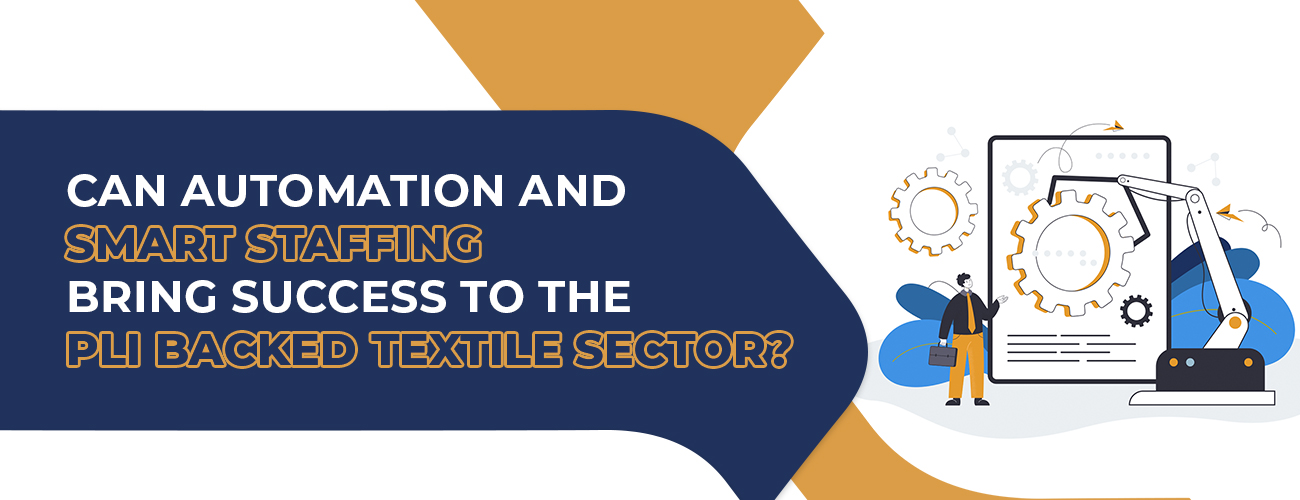
Q1 FY23 brings in new hopes and directions for advancement and growth. It is essential to introspect about staffing solutions and smart hr solutions which can create a better impact. Can Automation and Smart staffing bring success to the PLI backed Textile sector? The answer is a big Yes.
PLI is expected to help in the growth of the businesses drastically and hence the requirement for manpower is going to be at an all-time high along with the automation. Staffing players like TeamLease have a major role to play in this journey in terms of providing skilled labour in a short span.
Identifying the pain-points such as employment concerns including less Jobs, low Wages, high attrition & employability issues due to low productivity, & lack of social security is essential to comprehend. Thereafter, offering of legitimate solutions such as optimization, specialisation, stability, predictability, innovation & skilling can be of a better choice. The difference at large can be observed when the thought leadership levers such as formalisation & human capital development can go ahead hand in hand.
Labour compliances and technology can move up to smoothen the manpower management, and learning opportunities for associates. These are going to be the key evaluators to become a worthy staffing partner to textile companies under the PLI scheme of the Government.
The textile industry in India contributes to about 5% of the GDP whereas it contributes about 7% of industry output, and about 12% of India’s export earnings.
MMF stands for man-made fibres and are of two varieties. The first one focuses on synthetic fibres which are produced from crude oil whereas the second one focuses on cellulosic fibres from the food pulp. Polyester, acrylic and polypropylene are the major varieties of the synthetic staple fibres. To expand and to ambit towards a specific function will bring quantitative and qualitative results, which for the textile industry is worth a focus.
This brings one to comprehend that the processes that can be dangerous to an individual such as spinning and dyeing, moving and making cloth pieces and fibres into fabrics or separation of seeds and cotton can be handled better, safer with the automation processes. With this, the smart workforce models can ensure job completion properly and efficiently.
What are the PLI schemes? Why are these important?
Production Linked Incentive scheme is being implemented by the government of India and aids in the growth and development of the sector. For the textile industry, the current focus is on the MMF productions, exports, PSF (Polyester staple fibre) and VSF (viscose staple fibre).
In India, the PLI scheme can help generate employment while staffing solutions such as TeamLease can help in workforce management.
The scheme encourages domestic and local production to create micro jobs and the motto of putting India to work by TeamLease works with a cause that can align with this. The scheme also encourages for foreign companies to find suitable staffing in India and hiring solutions formalisation can help get better employee management, engagement & DE & I initiatives to be effective.
Along with higher production, smart staffing and workforce management what is also essential is safety and security. With automation, the clause of people, process and technology gets easily and better satisfied. With automation not only will the textile industry produce better and faster, but will aid the human resource of the industry, the employees to be having safer working conditions and increase in efficiency.
Skill level workers could reduce, however high skilled workers, upskilled workers can be engaged for better results and directional outcomes. There might be higher investment however, since the focus of PLI schemes and the need of the hour of the textile industry is to grow higher, in the long term, the investment for automation is definitely worth it.<br?
With the digital upgrade, recruitment, the workforce payroll, real time attendance, software solutions support, automated integration can update and smoothen the way the textile industry works and delivers, which for 2022-2023 is a much needed area to lookout for.
With an aim to develop several globally competitive champions and as a global industry led by MMF in textiles, automation and smart staffing can bring success to the PLI backed Textile Sector.
Author

Latest Blogs
Retail Staffing and Recruitment Challenges in India
India's retail sector is undergoing a period of rapid transformation. Driven by rising consumer spending, the expansion of organized retail, omnichannel business models, and growing...
Read MoreCombat Employee Turnover with Predictive AI
Employee attrition has become one of the biggest workforce challenges for modern businesses. It impacts productivity, hiring costs, and long-term growth. Traditional retention strategies often...
Read MoreFuture of Work: Upskilling and Reskilling in the AI Era
The acceleration of artificial intelligence is reshaping labor markets at a pace that conventional education and workforce systems struggle to match. This is not merely...
Read MoreHiring Trends 2026: Workforce Solutions for Recruitment Challenges
India’s labour market in 2026 is undergoing a structural shift. While economic expansion, digital transformation, and AI adoption are accelerating hiring demand, employers continue to...
Read MoreTalent Management Strategy 2026: Skills-First Future-Ready Workforces
Talent management strategy is undergoing a fundamental shift as organizations move beyond traditional hiring models toward building agile, skills-driven workforces. Rapid technological change, AI-led disruption,...
Read More13 Reasons Why: New E-commerce Rules Haunt Businesses
The new e-commerce rules had a greater and direct impact on the businesses. Those there were welcoming aspects, there have been certain aspects that cannot be ignored. Looking at the flip side of the coin, gives one a specific idea on the peculiarities of these new rules.
Concerns Still Linger
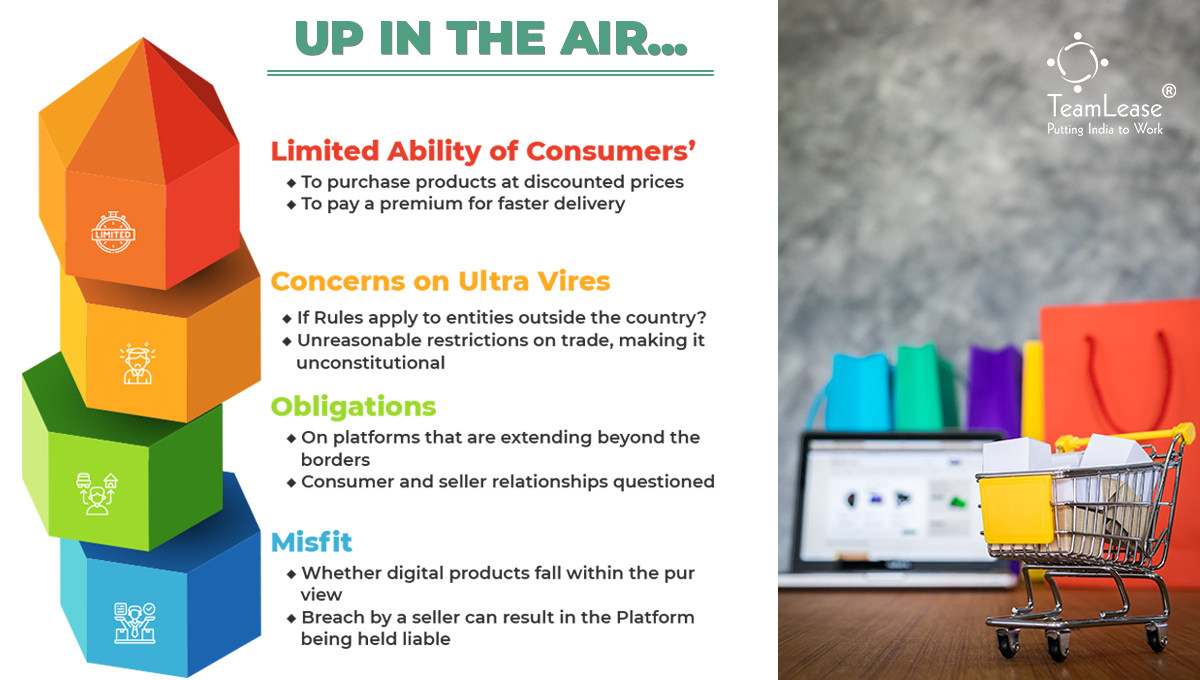
Any breach of these Rules will have to satisfy the condition of being an “unfair practice” before they are held liable. Several questions are still unanswered in these new rules, like –
1: At the functional level, is the implementation and application of the rules possible to the fullest extent?
2: Silence on the assessment licensed by an entity based in another country. (Assessment of goods assembled, packaged or manufactured in one country)
3: The kinds of digital product offerings fall within its purview?
4: If a breach by a seller can also result in the Platform being held liable?
5: If the new rules of the act are beyond the legal power or authority (ultra vires)?
6: Complicated because these rules are applied to entities outside of the country.
7: The rules’ obligations are imposed on platforms that are extending beyond the borders between consumer and seller relationships?
Up in the air…
Key Issues with New E-commerce Rules
At a deeper level:
8: Lack of Definition: Lack of uniform definition of e-commerce, since buying/selling goods online are generally considered as e-commerce/internet commerce, even though the final delivery is largely offline.
9: Ease of Doing Business: The restrictions include a gamut of compliances, which, by increasing the regulatory burden, can reduce the ease of doing business for startups on online platforms.
10: Entry Barrier: Free trade practices that enabled startups to easily enter the e-commerce trade arena would cease to exist.
11: Burden on Sellers: The burden will eventually trickle down to the sellers, affecting the top line.
12: Agreement Rejig: Any company that currently has a common beneficial ownership agreement or is associated with an e-commerce company will not be allowed to be listed as a seller on that platform and might have to shift. This could result in building a whole consumer base from scratch involving costs and/or losses
13: Increased liabilities: For online e-tailers for all trade carried out on their platforms.
Business Impact and Probable Outcome
Although these New Rules are a welcome step in ensuring the welfare and protection of the interests of consumers using the various e-commerce platforms, these new rules will also put significant limitations on the consumers’ ability to purchase products at discounted prices and pay a premium for faster delivery.
For the platforms, the dawn appears gloomy as businesses have a host of things to comply with as per the rules laid out. There are thus multiple pointers that the businesses are worried about.
On the Lookout
As mentioned, the new rules have a flip side of the coin to look out for, and these are quite haunting. Unless the concerns are answered, it is difficult to migrate everyone onto a new ecosystem without turbulence.
However, we must welcome these changes as the rules and not as the ruler. With a positive growth outlook for the E-commerce industry, it’s necessary to take stock of the drivers of growth, as they are the implicit rulers of the industry. These new rules are a stepping stone for the regulatory norms surrounding this industry to bridge the gap between brick-and-click marketplace models.
Author

Latest Blogs
Retail Staffing and Recruitment Challenges in India
India's retail sector is undergoing a period of rapid transformation. Driven by rising consumer spending, the expansion of organized retail, omnichannel business models, and growing...
Read MoreCombat Employee Turnover with Predictive AI
Employee attrition has become one of the biggest workforce challenges for modern businesses. It impacts productivity, hiring costs, and long-term growth. Traditional retention strategies often...
Read MoreFuture of Work: Upskilling and Reskilling in the AI Era
The acceleration of artificial intelligence is reshaping labor markets at a pace that conventional education and workforce systems struggle to match. This is not merely...
Read MoreHiring Trends 2026: Workforce Solutions for Recruitment Challenges
India’s labour market in 2026 is undergoing a structural shift. While economic expansion, digital transformation, and AI adoption are accelerating hiring demand, employers continue to...
Read MoreTalent Management Strategy 2026: Skills-First Future-Ready Workforces
Talent management strategy is undergoing a fundamental shift as organizations move beyond traditional hiring models toward building agile, skills-driven workforces. Rapid technological change, AI-led disruption,...
Read MoreRevisiting the Talent Strategies for FY’23: People, Processes & Technology
Background:
2020 to 2022, the workforce & the industries saw an upheaval. Several challenges, push and pull resulted in major changes in the methodology and algorithm of work.
With the changes, trial & error, and transition, the industries have come to terms with much more clarity and stability. FY’23 is the year that is a roadmap ahead. It is essential to now revisit the talent strategies as it affects the People, Processes & Technology framework.
Introduction:
Stagnancy will not help either the workforce or the industries. For visibility, performance management, and operational efficiency, this framework needs to be revisited as it affects the employees and tools directly.
While people, which is the skilled workforce, would do the work, the process would channel it and the technology would aid it and make it faster and simpler. Now with the pandemic, digitalization and formalization have taken the target. As industries are emerging back to the pre-pandemic levels, what has shifted in the process and the technology aspect of this framework. Skilling, upskilling, and reskilling are the key to adaptability or there is something more.
Key Trends & Concerns:
-
- The industries, where possible, offered remote working options
- There are now hybrid models of work adopted
- Some industries and sectors are looking at employees coming back to the office
- Changing variables in the processes, methodology, research, and fieldwork
- Uncertainty with the level of skilling up of the employees
- Lack of social contact due to a long remote working environment
- Digital software solutions are a need, however, not all industries have ramped up in investing in these critical tools
- Lack of balance between the three aspects of the framework – People, Process, Technology
- The people, which is the human resource, are leveraging the technology, but not to its full extent yet
- Physical, mental, financial, and social aspects of an employee’s well-being; are not balanced out well
- Processes that can include gig workers, contractual workers, and apprentices equally
- Technological support and digital tools can make work more productive, qualitative, and even quantitative. Areas not yet explored horizontally and vertically
Factors that will support the momentum:
‘Back to office’ is trending. This will push more manpower hiring and hiring of employees from Tier 1 and 2 cities. The workforce also would see hybrid and remote working options being offered by some specific sectors.
New rules, laws, and regulations can change the way the processes will take place. Technology will bring a formal, long-lasting solution aiding people and processes and will pull those aspects out of a makeshift arrangement.
Blue-collar jobs have been back in demand. Women workforce hiring is equally seeing a rise. The migration of workers is taking place again and workers are coming back to their workplaces. Focus on regional skills, local languages, and being digital savvy is in focus in the hiring process. The attrition rates are going down across sectors, especially in the emerging sector.
Software’s and digital solutions focusing on core HR processes, employee on-boarding to exit, and features such as face recognition are in focus. Features such as corporate learning, wellbeing and performance management, Engagement & culture, diversity, inclusion & transparency, analytics & planning, workplace productivity are gaining attention.
The arrival of 5G technology, the focus on bringing in drones technology in various industries, the usage of automation in processes, the EV infrastructure being welcomed, the set-up for construction and real estate have gained momentum. These are a few of the many that are under the radar or re-emerging sectors which will directly make it essential to revisit the talent strategies for FY’23.
Conclusion:
A revisit of the talent strategy will ensure a formal audit of the existing process of the People, process, and technology framework. Data-driven improvements can take place bringing efficiency and effectiveness.
The optimization of the performance of the talent lies in workforce management. These structures will have a dynamic shift and would see the human capital needs meeting up by the industries. Not just the employees who need the job, but employees who are skilled, talented, and employable would take the spotlight.
Retention of this workforce will increase the pool of talent within the industries, which will be productive and lucrative for the emerging sector, in the long run.
Know more about how emerging businesses can benefit from the right balance of talent:
Author

Latest Blogs
Retail Staffing and Recruitment Challenges in India
India's retail sector is undergoing a period of rapid transformation. Driven by rising consumer spending, the expansion of organized retail, omnichannel business models, and growing...
Read MoreCombat Employee Turnover with Predictive AI
Employee attrition has become one of the biggest workforce challenges for modern businesses. It impacts productivity, hiring costs, and long-term growth. Traditional retention strategies often...
Read MoreFuture of Work: Upskilling and Reskilling in the AI Era
The acceleration of artificial intelligence is reshaping labor markets at a pace that conventional education and workforce systems struggle to match. This is not merely...
Read MoreHiring Trends 2026: Workforce Solutions for Recruitment Challenges
India’s labour market in 2026 is undergoing a structural shift. While economic expansion, digital transformation, and AI adoption are accelerating hiring demand, employers continue to...
Read MoreTalent Management Strategy 2026: Skills-First Future-Ready Workforces
Talent management strategy is undergoing a fundamental shift as organizations move beyond traditional hiring models toward building agile, skills-driven workforces. Rapid technological change, AI-led disruption,...
Read MoreImpact of the New E-commerce Rules on Businesses

Impact of the New E-commerce Rules on Businesses
New Rules for a New Dawn; Protecting the interests of consumers using e-commerce platforms
Current Trends
Given the huge spurt in e-commerce transactions since the pandemic, approx $80 billion, a 36% growth in 2020 alone is reflective of the digitalisation revolution. With such high volumes of transactions, it is only natural to revise the regulatory norms. As a part of the Consumer Protection (E-Commerce) (Amendment) Rules, 2021), the new rules aim to protect the interests of consumers using the various e-commerce platforms.
New Rules for a New Dawn
To manage and regulate the mushrooming of new players in the industry, there are new rules brought in to accelerate and formalise the way e-commerce functions in India. While certain rules are beneficial to the consumers, some favour the business owners.
As India sees a surge in e-commerce trends, it is time the rules get revised. We see that the changes do not have all questions answered as yet, however, the change is reflective of the change for the good, in the long term. Let us examine what these new rules are, how it affects and impacts businesses and consumers.
Key Takeaways of New Rules
There are increased responsibilities for the e-commerce platforms towards their consumers and tightening of restrictions on e-commerce trade. Any enterprise that is associated with an e-commerce company will NOT be allowed to be listed as a seller on that platform. For example, Amazon cannot list Appario (a subsidiary of Frontizo, a JV unit of Amazon & Patni Group) as a seller, as they’re associated.
Other than this, here’s what platforms need to take care of:
1. Requirement for a company outside India (or a company having an office/branch/agency outside India), to be controlled by an Indian resident
2. Appoint a nodal officer/alternate senior designated functionary to ensure adherence to the rules and provisions.
3. The amendments to the rules seek to ban flash sales, raise compliance needs, and fix liability on platforms for the failure of the sellers registered with them.
4. Add details of the country of origin for all products listed and recommend local alternatives for all imported goods.
5. List out the terms and conditions that deal with their relationships with the sellers.
6. Maintain a record of all the sellers whose offerings have repeatedly violated trademarks, copyrights, or the Information Technology Act.
7. No misleading advertising and promotions to consumers
8. Data needs to be updated within 72 hours with reference to the inventory of goods.
9. Certain restrictions and obligations when it comes to the pricing of their products, returns, late deliveries and false customer reviews.
10. No cancellation charges can be imposed unless similar charges are payable by the Platform due to the said cancellation.
What to Expect
In the longer term, the new rules will bring in a change in a way that solves the concerns that were lingering before the New rules came into force. Despite the uncertainty, the new rules are looking out for a better future for the e-commerce industry.
These New Rules are a welcome step in ensuring the welfare and protection of the interests of consumers using the various e-commerce platforms.
Since November 2021, the rules have been notified by the ministry, and this wave of the new e-commerce rules has come in just in time when we observe exponential, consistent growth of startups and small businesses. Online platforms have provided a much-needed shift from a B2B mindset to a B2C one, getting into a digital ecosystem beyond the geographical limits.
This blog is a precursor to another blog of the series, titled ‘13 Reasons Why: New E-commerce Rules Haunt Businesses: Flipside of the Coin.’ Watch out for more in this space.
Author

Latest Blogs
Retail Staffing and Recruitment Challenges in India
India's retail sector is undergoing a period of rapid transformation. Driven by rising consumer spending, the expansion of organized retail, omnichannel business models, and growing...
Read MoreCombat Employee Turnover with Predictive AI
Employee attrition has become one of the biggest workforce challenges for modern businesses. It impacts productivity, hiring costs, and long-term growth. Traditional retention strategies often...
Read MoreFuture of Work: Upskilling and Reskilling in the AI Era
The acceleration of artificial intelligence is reshaping labor markets at a pace that conventional education and workforce systems struggle to match. This is not merely...
Read MoreHiring Trends 2026: Workforce Solutions for Recruitment Challenges
India’s labour market in 2026 is undergoing a structural shift. While economic expansion, digital transformation, and AI adoption are accelerating hiring demand, employers continue to...
Read MoreTalent Management Strategy 2026: Skills-First Future-Ready Workforces
Talent management strategy is undergoing a fundamental shift as organizations move beyond traditional hiring models toward building agile, skills-driven workforces. Rapid technological change, AI-led disruption,...
Read MoreThe Gender Banter: Implications of not Practising What We Preach

Background:
Being a woman is very special, but being a woman is not easy, at least not when it comes to participating in meaningful and paid work. Women empowerment happens in the true sense and to its fullest extent when the organisations give importance to the power of inclusion of women at work, giving them equal participation opportunities.
Challenges:
There is a major challenge for organisations and their leaders to standardise the concerns related to gender equality and the quality of work designated to the workforce. The implications of not practising what we preach will broaden the gender disparity of the workforce in India, which will contribute to a higher rate of attrition in job roles taken up by women. Unfortunately, this would end up widening the skill gap, and creating an occupational divide. Women, usually considered as the primary caregivers, have to stay back home, take care of domestic responsibilities, and take the burden of familial tasks over everything else. As per IMF research in 2018, Women’s unpaid domestic work is estimated to be valued at almost 27 % of India’s current GDP.
Problems:
- According to the TeamLease data of 2021, the hiring by gender is 88:12, indicating that less than one-eighth of Indian women are at work.
- According to Global Gender Gap Report 2021, the gender gap in India has widened to 62.5% and has slipped 28 places, ranked 140 out of 153.
- Between 2011 and 2020, the labour force participation rate for women remained slightly over 48% and declined gradually to 46% in 2020, as per ILO.
- It is also observed that 82% of women in prime working-age in one-person households participated in the labour force, compared to 64% of women in couple-only households and 48% of women in couple households with children.
Points to ponder upon: Solving a piece of the gender banter puzzle is not the solution. Understanding that the main problem is not to just bring women back, but to help them in the transition. Skilling is one step forward to making women more employable. What can inspire women would be increased female participation in leadership roles, more women as role models and mentors. Women, while re-entering the workforce, need psychological support more than tangible support. It would additionally be a changing trend to see more women in male-dominated roles like delivery partners, pilots, construction and manufacturing workers, architecture, automotive, and so on to name a few.
Key initiatives by the government and the organisations: Various welcoming initiatives like Mahila-E-Haat, Rashtriya Mahila Kosh (RMK), Pradhan Mantri Matru Vandna Yojna, National Crèche Scheme among others have been taken by the government to accelerate the inclusion of women in the workforce. In addition to this, Corporate India has also taken steps in the form of policies and benefits for maternity, flexibility, off-location, and hybrid work models, to name a few.
Some of the solutions to the problem:
- Women want to be in a formalised working environment. The workforce in blue collar jobs, labour and marginalised communities of women to be given opportunities.
- More women Entrepreneurs are needed that will create more opportunities for all but especially women.
- To recruit more women, the job postings should be more inclusive.
- Initiate schemes for skilling, upskilling, and reskilling for women returning back to work along with psychological support.
- Strategic need to have a DE&I policy in place; ensure the execution to nurture a diverse, resilient workplace.
- Creating women’s workforce support bodies, and awareness programs that can bridge the wider gap between the problems and solutions.
- Flexible working options and gender equality policies will be encouraging.
As it was famously said, “When you educate a man, you educate a person, but when you educate a woman, you educate an entire generation.” The same applies to empowering women to find their footing in organised employment. We think the saying, in this case, would go like this, “When you employ a man, you empower a person, but when you employ a woman, you empower the many generations.”
If we fail at the inclusion of women in the workforce, we will be losing on economic growth and sustainable development, Let’s #BreaktheBarrier with a better platform, numerous opportunities for women as we celebrate International women’s day and bring into practice what we preach.
Author

Latest Blogs
Retail Staffing and Recruitment Challenges in India
India's retail sector is undergoing a period of rapid transformation. Driven by rising consumer spending, the expansion of organized retail, omnichannel business models, and growing...
Read MoreCombat Employee Turnover with Predictive AI
Employee attrition has become one of the biggest workforce challenges for modern businesses. It impacts productivity, hiring costs, and long-term growth. Traditional retention strategies often...
Read MoreFuture of Work: Upskilling and Reskilling in the AI Era
The acceleration of artificial intelligence is reshaping labor markets at a pace that conventional education and workforce systems struggle to match. This is not merely...
Read MoreHiring Trends 2026: Workforce Solutions for Recruitment Challenges
India’s labour market in 2026 is undergoing a structural shift. While economic expansion, digital transformation, and AI adoption are accelerating hiring demand, employers continue to...
Read MoreTalent Management Strategy 2026: Skills-First Future-Ready Workforces
Talent management strategy is undergoing a fundamental shift as organizations move beyond traditional hiring models toward building agile, skills-driven workforces. Rapid technological change, AI-led disruption,...
Read More5 Tips for Startups to become Unicorns and Go for IPO

The Good, The Bad and The Ugly of Startup Pitfalls
2021, or “The Year of the Indian Unicorns”, as it might be called in the future, was an amazing year for startups and employment in the country. India now has the 3rd largest startup ecosystem in the world; expected to witness YoY growth of consistent annual growth of 12-15%. 50,000 recognised startups as of mid June 21 and 16,000 added in 2020-21. Startups created around 6.5 lakh jobs in the year as per the Department for Promotion of Industry and Internal Trade (DPIIT) Secretary.
There were 81 Unicorns, or startups valued at more than USD 1 Bn each, with USD 82.1 billion in combined valuation. 44 of these joined the elite cohort through 2021, making this the most successful year for India startups by valuation. Not to forget another landmark, cumulatively Indian startups making the IPO splash and raising USD 2.5 bn from the markets. This is a great sign that the quantity and quality of innovations being funded in India are showing profitable exits and sustainable futures. The pace of investments is starting to reflect the potential on the ground.
The future looks bright with this new found confidence of investors in innovative and profitable ideas from India, that will definitely lead to a buzz of hectic activity in the startup, unicorn and IPO space over the next couple of years, at least. “At least”, because things could all go horribly wrong from here. After all, the Unicorn status is only an indicator of value or intangible valuation, based on a small investment and is only a guess of the final value, and not real value or money.
In 1991 the Indian economy took a big step towards its rightful global stature and 3 decades later, in 2021 we are at the cusp of yet another transformative landscape with the coming of age of Indian Startups. What we need to think about, long and deep, is how to ensure that a larger number of startups become unicorns, and the largest number of unicorns to become sustainable and profitable value creators, adding digits to the strong growth story of this phenomenal country, and an emerging superpower – India.
Yes, there can be too many Unicorns, which can lead to a bubble. Most of the Unicorns will fail. That is the law of nature and evolution. This is also applicable to the startup ecosystem in India that is barely standing up and taking its first steps from infancy towards adolescence. This is the ulgy that can happen, and we need to be deliberate in our next steps to avoid the potholes of a failing startup culture that can take us back by many decades in our growth story.
There are many pitfalls in the journey from an idea to a startup to a unicorn to a (un)successful business, but the most critical phase in any startup’s journey is the step from unicorn to exit. Either the business will succeed and the investors will exit the business profitably or the business will fail and will have to exit the market at the loss of money and confidence for its investors. Zomato did it, and your startup can do it too.

Here are a few tips to notice and keep the impact of these ugly possibilities in check.
Tip 1: Make the Funding Last
Being flush with funds after a long time of counting pennies can be a huge relief. Sometimes, too much of a relief that can lead to a feeling of having achieved the final goal and splurging on any and every idea. Getting the funding is hard, but not the hardest part of being a startup, especially if the solution is valuable in the market and differentiated from what already exists. It is better to be slow and steady than fast and furious in the startup race circuit. Look at Five Star Finance, which achieved Unicorn status with only USD 200 Mn in funding and took 37 years to reach here.
Tip 2: Prioritise Fund Allocation
So, if you have gotten funding, stop and think about what the critical elements are that need to be funded to stretch the money as far as possible. After all, given enough time, all good ideas can reach their full potential. Spending too much, too fast, on too many non-critical elements is a cardinal sin for a startup. Most of the startups get this step wrong because they start believing that their funding proves that they know better than the market. See how Snapdeal floundered without a clear focus on the critical elements for success. Also, Hike was erstwhile hailed as the youngest startup to get Unicorn status but it lost its path in a labyrinth of features, which reinforces the need to get the basics right.
Tip 3: Focus on Speed of Scale
If anything is critical at a startup, it is the acquisition of new customers at a pace faster than the market and competition. This is one of the critical elements that funding has to be pumped into. A deep dive into the cost of acquisition is pivotal for consistent progress. Look at how Amazon is still in this mode of growing their audience base at the cost of never having shown a profit to date, but no one is complaining because they are way ahead of the competition and still increasing the gap.
Tip 4: Think and Stay OpEx
Being flush with money is empowering, but funding money is not real money. The funding is a loan from your own future, so be ready to answer to your future self if you don’t think through every expense. Hence, it is a good idea to spend as little as possible on a recurring basis rather than making large one-time capital expenditures that can deplete the funds faster and shorten the runway that is required for a startup to grow its wings. We are yet to see how the series of acquisitions by BYJU’s scripts their exit story.
Tip 5: Never Lose Flexibility
It is important for a startup to experiment. After all, every startup is an experiment in itself. So, before the startup forms a reasonably resilient structure, it will have to try out different bones and joints to find its core, particularly in terms of recruitment. This flexibility can be in terms of the number of seats required, employment to be provided, the kind of skill sets needed in every phase of its early life, or even the kind of HR tools and processes. Most startups appreciate the benefits of contract staffing for managing the manpower needs as per employment seasonality in growth cycles.
Conclusion
While this nuclear explosion of startups and unicorns in India seems promising, the future may come with a looming risk of apparent congruence. The startup ecosystem, especially in the e-commerce space, is driving the growth engine for job creation and has bolstered at least 650,000 lakh jobs. What’s more? We are creating new benchmarks for ourselves.
Having been a startup ourselves that went for IPO not so long ago, we have always worked closely with the startup ecosystem and are currently serving over 20 Unicorns from only one of our business units. With this evolving experience of working with multiple startups and unicorns across industries, we have seen and solved their challenges from up close. We have seen the exhilarating feeling when one piece of the puzzle fits into place and have been party to the pain when a simple overlooked idea causes a disruption down the line.
TeamLease offers end-to-end people supply chain products and solutions that help startups to add & augment flexible staffing to their business at a low-cost opex model, making them nimble and responsive to the fast-changing market requirements. Our belief is that every startup needs a fighting chance, and in providing it, we want to become their partner of choice for staffing and employment-related offerings and grow with them.
Author
Latest Blogs
Retail Staffing and Recruitment Challenges in India
India's retail sector is undergoing a period of rapid transformation. Driven by rising consumer spending, the expansion of organized retail, omnichannel business models, and growing...
Read MoreCombat Employee Turnover with Predictive AI
Employee attrition has become one of the biggest workforce challenges for modern businesses. It impacts productivity, hiring costs, and long-term growth. Traditional retention strategies often...
Read MoreFuture of Work: Upskilling and Reskilling in the AI Era
The acceleration of artificial intelligence is reshaping labor markets at a pace that conventional education and workforce systems struggle to match. This is not merely...
Read MoreHiring Trends 2026: Workforce Solutions for Recruitment Challenges
India’s labour market in 2026 is undergoing a structural shift. While economic expansion, digital transformation, and AI adoption are accelerating hiring demand, employers continue to...
Read MoreTalent Management Strategy 2026: Skills-First Future-Ready Workforces
Talent management strategy is undergoing a fundamental shift as organizations move beyond traditional hiring models toward building agile, skills-driven workforces. Rapid technological change, AI-led disruption,...
Read More